Showing posts with label whatiknowishare. Show all posts

Monday, 7 July 2014

3 cool web-tools for visualization geeks

Hi guys! I am back again. 

You are not going to believe what I have been doing these past couple of months! While I am in the process of summing up everything that happened in a blog post or two - take a look at the following paragraphs. Here are some cool tools for making our life more visual and visually beautiful :) Enjoy!

As it has already been mentioned in one of my really early web-notes, it's all about visualising big data now. Just think of how you browse news on the Internet or read scientific reports (I can only imagine a person sitting in a big cosy chair reading something on nuclear physics) or even your Facebook timeline. There are only a few things to catch your eye - screaming headlines, videos and pictures...mainly videos and pictures. Thus, in order to spread the message people and companies have to re-invent the wheel. Well...in a cool way. Like Vice News with their cartoonish stories Correspondent Confidential or, say, 'I am a Drop in the Ocean' project (well known yellow&blue poster symbolising ideas of freedom, democracy, mutual help and all-national support in a minimalist picture). 

Of course, all great ideas soon become the over-used ideas, or move from 'Oh my gosh so-o-o amazingly original & fresh' phase to the 'we just had too much of it'. If you want an impression of 'infographics gone completely wrong' or 'how to ruin the idea of visualisation - I found this Guardian collection of 16 useless infographics. Moreover, I decided to share this great little guide from journalism.co.uk which looks into the psychology of visualisation and the extent to which colour, form and icons influence perception of the data. 

Now that you are completely backed-up with all the basics, let me share with you something pretty:


What's that? I would call it great easy-to-use and free-to-download online tool for infographics. But the 'official' definition would be:

'easel.ly (n) - a theme based web-app for creating infographics and data visualizations'

So basically it differs from the other similar tools in terms of simplicity. Easelly offers a huuuge range, like really impressive one, of pretty and unusual themes even a child could adopt for creating a nice original infographics. Like, for instance, this free hipster theme on the left. Have you seen anything better? Hipsterlicious! In addition to the standard picture formats, you can also download. pdf version which is supposedly nice. I was going to embed this video presentation of the app, but the music in it was too annoying and I do not want to annoy my readers, so I am just going to paste this link here, so you can see for your self. However, what might actually be professionally useful is this video below which shows the way Eeaselly may be used by journalists. 
Here you go:

2. Tiff 
Speaking of hipsters: 
'I got a tattoo of the word Helvetica on my chest in an Arial. It's ironic, you know'. If you don't get this joke from a PocketHipster app - the Tiff tool will be super useful. If you do get the humour, check how much an expert on fonts you are by taking this silly test here. This article from The Industry may also shed some light on the mystery behind the two alike looking fonts. Anyway, moving on to the tool:

'Tiff (n) - is a type diff tool that visually contrasts the differences between two fonts'.

The tool may help you to decide which font to use for your blog, or simply get more familiar with the styling differences. The only potential problem I see with this tool is that it only recognises Google Web fonts, but having tried many different combinations I did not see it as a big flaw. If you really do want to compare a wider selection of fonts or simply want to know more similar tools - check Typetester (may not be that hip, but super useful as it shows you text extracts in bold, italic and other styles and allows comparing 3 different fonts at the same time). To make it a list of 3, will also share with you this font-comparer with an original name Fontcomparer %-). It does not have a wow-design, but seems super convenient. So do not forget to check it out.

3. RAW 

Ok. Now when I have tried this web-application, I want to go back to my statistics course and re-submit my lame Excel tables, pasted-in-a-Word-document graphs and other simple-looking data visualisations. RAW has been specifically designed for aesthete-sociologists, journalists and other specialists who work with data. 


'Raw (n) - an open web app to create custom vector-based visualisations on top of the amazing D3.js library through a simple interface'. 


Beautiful graphs and charts can now be made in 5 easy steps: 
copy-->paste-->customise-->export-->enjoy

Your work can be exported in vector format (.svg) or .png

And here is another video illustrating more useful features of the tool.

Raw 1.0 - Basic Tutorial from DensityDesign on Vimeo.

That's basically it. Thank you for reading :-) 

Wednesday, 27 November 2013

What do you do when Google calls you?

Happy Wednesday!

I know it's been ages I last blogged here, but I hope my today's story will be worth such a long wait!

Remember, when I just started my blog I've shared with you some tips on how to make your CV stand out? Well, now I have a little proof my tips really work as I have been invited for an interview by one of my dream employers!

In case you are wondering what are the international companies I would looove to work for/with, here is my TOP-5 list: (my list is a bit different if I were to work in Ukraine)

1. Google because it's Google
2. BBC because working on TV is the best thing ever (trust me with this one as I did work on TV)
3. Apple because it's the ideal place for creativity, innovations and marketing
4. Burberry because I am as classy as their iconic products ;)
5. HBO because they made my favourite TV series

I wanted to make it very intriguing and not tell you what was the company that I had an interview with, but having considered all the pros and cons I went for a 'hooking headline' instead. So yes, it's Google!

Once upon a time I have applied for almost every potentially matching position at Google and started waiting for my lucky day. Nothing happened. :-) Couple of months or maybe even half a year later I read the news story on the new office Google is about to build in London in 2016 - 'I know where I will work in 2016' - posted I on Facebook the very same day. (I somehow believe in the idea of visualisation making dreams come true a little bit faster). Imagine how surprised I was when the following Monday I received an email with a subject line - 'Hello from Google'!?!?

'Hello, to you too', - I thought and could not really believe that their HR manger was inviting me to apply for a position of Associate Account Strategist. At first I was asked to submit a motivation letter in the language needed for the position (Ukrainian) and prepare for a little phone conversation. 

You may have already read (I did that sooo-o-o many times) that Google offers their job candidates at least 3 rounds of interviews before the hire. Depending on the location of the applicant interviews may be conducted by phone, by Google Hangouts or live (on-site interviews are usually the last phase). As I was invited for the first phone interview I checked other people's blogs to get some tips. Now I am sharing my own experience with you. :)

1. First interview is about first impressions

My first impression on the interview was very nervous as I did not receive a call on the agreed day and even though my motivation letter was not good enough or something. The situation was worsen also because I have read an article saying that in the US it's a common practice for the recruiters not to call and not to respond to the emails after. But now I think this is rather an exception, because in my case everything worked out well - I emailed HR staff and we agreed to have that call the day after.

Anyway, the aim of the first interview is to check whether candidates speak understandable English and are generally adequate. :) The HR manager are usually very friendly and nice as they talk a lot about the position, location, Google and the benefits you will get. The questions I was asked and everyone should be prepared to answer are the following (and may vary depending on vacancy):

- Tell me more about your previous experience and highlight how it is relevant to the position you are applying for.
- Have you had any clients-facing experience? Tell me more about it. 
- What is the project you have worked on that you are especially proud of?
- What's the biggest challenge you've overcome?
- If you were about to explain the benefits of Google AdWords to a client, what would you say?
- What are the current advertising trends in the region you are applying to work at?
- What salary would you expect from this position?
- How do you feel about moving to work in another country?

After that I was provided with more details on the recruitment process and the working scheme designed for that particular position, and the next interview date was set up. 

2. The second interview is about your competency and suitability for the particular position

I am a very happy person really, but I am not that lucky, so when something can go wrong - it always does. :) Therefore, when on the day of the second interview (a week after the 1st one) my phone went nuts and 'did not want to pick itself up' (basically I could see the call on my screen, but could not do anything with it until it turned off unexpectedly) leaving me with 8!!! unanswered calls from Google, I was not that much surprised. 

Yes, I was extremely upset and nervous, but luckily HR person emailed me in a minute, so that I explained what happened and asked whether it would be ok for me to call back. Turned out another call did not go through, so we decided to have that interview the next day. Again, not a good sign at all, but to get a job at Google is never easy, is it?:)

The second interview is conducted in the language(s) of the area you will be working with and by the person who works in the department you are applying in. The reason for this is that the person can better test your suitability, qualification and competency. The questions where constructed in a way so that I could provide a more detailed reflection on my previous work and gained skills.

- Tell me why are you applying for this job, what do you think you will bring to this position (your experience) and what is it you would want to learn/achieve from working at Google and at this position in particular?

- Tell me about a situation when you had an ethical dilemma at work, what the situation was, what did you do and what happened after? If the same thing happens again at your new job, what will you do?

- Tell me about a situation at your previous work when you improved a certain process? How? What results did you achieve?

- Have you ever worked with a difficult customer? What the situation was and how did you handle it?

- Did you have any leaving-abroad experience? Tell us about the challenges that you've faced and what have you learnt from them? 

- Imagine that you have a client who wants to sell smartphones in this particular city (say, Glasgow). How would you define target audience and its volume? What solutions in terms of online advertising you would offer?

- What is Display Network and what is the difference between Display Network and Search Network?

The rest of the interview you are encouraged to ask questions, what I did. :)

3. To sum up!

From what I know now - the key to success (both with CVs and interviews) is to tailor everything you write and say to the position you are applying for. 

Calm down, be relaxed and prepared - it's very unlikely you will face the same phone-call-disaster twice (because I already did and bad stuff rarely happens more often), so you will be fine!

Believe in your dreams and you will receive your lucky email. :-)

Keep trying and you will get your dream job - this is what I am going to do anyway!

Best of luck,

Maria 


Thursday, 31 October 2013

Who is afraid of digital marketing? OR the Scariest Post so far!

Happy Halloween to everyone! :)


Never understood how scary holiday can be happy, though!;) Time to read about digital marketing tricks and treats inspired by this popular celebration.  Many news websites now offer their readers interesting pumpkin pie or soup recipes as well as coffee shops showcasing brand new pumpkin-flavoured lattes (I`ve tried one of those 2 days ago - not bad at all). 

Here is my Halloween marketing recipe.


1. Play with words

Did you know that every October the word ‘Pumpkin’ gets 20 times more searches than normal? Yes, this is pretty impressive and should be taken into consideration. What does this mean for us? Well, in our digital world we can plan content strategies around relevant holidays, celebrations or seasons; take trends onboard and craft content accordingly, having fun with wording, paying attention to keywords and tags.

Headlines are also important because of their power to increase engagement and readability of content. Therefore, I believe all Halloween headlines should be ‘killer’, content must be ‘scary-good’ and all of this better be accompanied with ‘to-die-for’ Tweets and Likes on Face-boo-k. Play with the words, turn them into hashtags, get involved in conversations and make the most out of the pumpkin hysteria!

2. Take pictures and make videos


Recently emerged phenomena of Vine and constantly growing popularity of Instagram encourage digital marketing practitioners to include those two apps (mobile social photo/video platforms) in their agendas even more. Six or fifteen seconds long, witty and creative videos may be a very good tool to use in the run up to October 31st. One of the most recent examples of great Vine Halloween-themed campaigns (fully described in AdWeek) was developed by washing powder brand Tide and consist of seven short viral videos. Every video clip features famous brand’s product in a well-known horror movie and a corresponding tagline, such as ‘Strains better be scared’ from the upcoming remake ‘Carrie’.


By the way, pictures of Halloween costumes may be also ‘Instagramed’. Moreover, if that’s a product you are launching or promoting, try putting a funny little costume on your product and make it Vine viral. Just imagine new iPad Air in a cute Batman cape :)

3. Create contests!

The last and probably the easiest idea to implement this last day of October as a part of digital campaign is to organise a contest. People love Facebook contests and so do I - they are engaging, easy-to-do and can only be limited to one's imagination. Photo sharing contest (such as of the craziest outfit or a handmade Jack O’Lantern; ‘guess a scary movie’ type of contest; the best Halloween meme; scariest-looking cupcake or even online trick-or-treating) can all be performed in order to make your brand more popular and more likeable while adding some life to your Facebook page.

Wednesday, 30 October 2013

PR Basics. Lesson 3: The Art of Telling the Story

Hi there,

The weather is so terrible these days and my feelings towards what is it I want to do in this life are so confused, that it was a real struggle today. (I know I promised to post something yesterday, but I hope you will forgive me). No, I still love you all and want to keep going, it is just one of those moments when you have to keep your dreams in mind and keep going.

There is so much to tell about PR basics, that I almost had no ideas what to share with you this time :-) We've already talked about strategy, target audiences, press release writing and media relations. Seems like it is time to write about...stories.

What is PR anyway? Hundreds of definitions may be given with all the references to Ivy Lee and Edward Bernays, but I was taught that real public relations is only possible to build when there is a great story present. In fact, just look at all those examples with Coca-Cola and recipe kept in secret, Susan Boyle and talent TV show, Apple and Steve Jobs, MasterCard and a guy who forgot his cash at home and than invented the first credit card ever and so on. All of these brands were made because of great PR and almost fairy-tale-like type of stories. But what if those stories have never happened, would we still know about and love those brands? Have those stories taken place at all or maybe they simply are the great examples of PR people outstanding skills of storytelling?

To start with, storytelling is something following me around these past few weeks. Firstly, I read about this big annual conference for PR specialists taking place in Ukraine where the main topic is going to be 'the importance of stories in PR' or something. Secondly, I have just started this new brilliant online course in storytelling organised by the University of Applied Science in Potsdam and could not be more interested in sharing what I have learnt so far with you.

1. Why is story important?

Like with all the great books, movies, TV series, myths and legends the magic (meaning the interest to the object of reading/watching/hearing) happens when the process of identification happens. Thus, if the audience realise they have some connections to the protagonists of the story or locations where everything happens, or sounds, smells, names - they start seeing a part of themselves in all of this. Similarly, with brands or other items for PR it is very important for potential customers to be linking themselves with the products/services which proves their loyalty. Brand can be appreciated for its prestigiousness/exclusiveness/britishness/mannishness or for being used by a certain people/group/class, and these distance features can only be established through a great story.

2. How do we create a story?

If you think that storytelling is important in PR only as a part of brand management, I can argue, there is so much more to it. Story is everywhere - in a press release you send to journalists, trying to make them interested; in campaign messages, in people you chose to be the speakers and even in the products you promote. And for every of these little tales there is one rule to keep in mind: the story should hook from the beginning (exposition), keep readers interested (confrontation) never let them go till the end (resolution). There are so many ways to hook your audience: some brand in their communication try to engage the audience with their long history and authority/trustworthiness/class (Guinness, Burberry, Rolls Royce), stories from Pepsi, MTV are supposed to hook young generation because these are the companies teens can identify their selves with.

On the other hand, it is possible to spot some patterns (cliches) in the PR stories borrowed from well-known legends/archetypes etc. For instance, Susan Boyle is a clear example of the Cinderella scenario, when somebody you pity at first becomes extremely successful kind-of-like-a-princes. The story with most of the politicians plays around Prometheus/Heracles characters -  very strong, confident personality with the ability to save the people of the given country and the whole world.

Now you probably think stuff like - hm...what about Samsung, Oreo, McDonalds and others - nah, we don't see any Cinderella-Prometheus happening with mobile phones, cookies, and fast food. Yeah, you are right, with products and services as opposed to people and fictional characters, stories may not follow a pattern in terms of plot, but archetypes do take place here as well. One can try to create something super-mega-hyper-wow with the overall PR&communication strategy, but in the end you will be able to see that your masterpiece is quite likely to be similar to something already know. Below I provide a diagram of the most popular cliches/patters/whatever used to create great stories.

There are a number of ways X and Y can be named. For instance, let X in the following example stand for 'Individualism vs Collectivism', while Y varies from 'Stability to Change'. So every brand can be described according to those attributes and place in the relevant corner of the diagram. I can now think of iPhone as very illustrative example of 'Individualism & Change' mix, as innovation, coolness and personality are among the brand values.

Change
(Dynamic, fast change, speed, risk, adrenalin, innovation)

Individualism Individualism CollectivismCollectivism
(Personality, uniqueness, exclusiveness)                          (Friendship, family/country/community values)

Stability
    (Power, authority, trust, strength)

Another brilliant classification of archetypes that help telling PR stories can be found in this guide by Synovate and their Synovate Censydiam methodology. The core of the system here is motivation, something that will make people buy/want to buy/identify themselves with a brand. I would recommend you look through the whole guide as it is full of great explanations and pictures, but the summery is below.

So the most common (archetypical) motives people have for doing things are represented by 8 colours. (I wonder if one can claim being super powerful because violet is their favourite colour :-)

Personal dimension is how we feel in relation to ourselves (we can either be very happy with ourselves and let our inner energy drive us - Enjoyment; or be very uncomfortable with what and who we are and behave like a control freak - no laughing, no staying up late, no driving fast - Control); while social dimension shows our relations to others (are we leaders who want to dominate - Power; or shy and discreet people who rather want to Belong to a group than lead it). And here are some examples from that guide on how this works in real life:

Enjoyment (adult toys archetype) = Smart cars that 'put mobility and entertainment at the heart of driving'

Conviviality = Beeline (Russian mobile operator) stand for 'connected people with a happy outlook on life in their communication'.

Belonging = Coca-Cola is the perfect example, as in the perception of the vast variety of people Coca-Cola equals holiday equals Christmas.

Vitality = Nike as 'testing your own limits and boundaries'

so on and so on. It is also really interesting that Beeline uses yellow, Coca-Cola is brown and Nike`s shoe boxes are red...

3. What do we do next?

Come back for more PR Basics tips next Tuesday and discover the answer.

Thanks again for making me come back to this blog and learn more and share it with you! =*

Your M.

Tuesday, 22 October 2013

PR Basics. Lesson 2: Target Audience, Stakeholders and Publics

Hello to you all!

It`s Tuesday - a perfect time for some Teaching/Learning. As I promised, today I will share with you a new blogpost on PR Basics. If you are new to my blog, let me offer you this first piece I wrote under the series of 'PR Basics'.

Having shared some clear, easy-to-understand and hopefully useful thoughts on everything PR people have to know about strategies, I decided to continue this topic with the following question: Who is who in PR campaign?

Obviously, such a slightly retoric question requires a comprehensive and not-so-straightforward answer which I am providing below for you, my favourite audience.

PR Basics. Lesson 2: Target Audience, Stakeholders and Publics

Overall, it can be said that apart from the PR person (somebody who is delivering a campaign, it can be a team as you know) there always at least three levels of people involved in the process. To specify, I will not talk about people behind the curtains (PR team) and not even those giving a performance (PR clients), but the audience - the most important judge, who decides whether you work is successful and usually is a key to success. 

As we established last time - there are three types of PR aims:

- Awareness
- Attitude
- Behaviour 

We also said that awareness is when you are trying to inform somebody that there is this thing you would want them to have). So here is how it works in a real example: you are telling your friend (Friend A) about this amazing new bag you saw on NET-A-PORTER.com in order to make them buy it for another friend (Friend B). First of all, you will make them 'Aware' the bag exists.

'Attitude' means trying to convince your friend that the bag is worth buying for another friend and make them see all the good about the bag, its price, colour, brand etc.  

'Behaviour' stands for the actual act of buying the bag.

As there are three aims/steps in the filling in the perception gap process, it should not come as a surprise that also three types of actors are involved in these steps, representing different types of publics:

1. Primary audience - these are the people whose awareness we would like to raise (In the above mentioned example the primary audience is Friend A) 

2. Secondary audience - are the people who may also gain some benefits from PR, therefore, they are willing to help approaching our primary audience. (Such as Friend B who will get a bag if Friend A is convinced to buy it).

3. Additional audience (such as thought leaders, scientists, celebrities etc) - those who can help us influence our primary and secondary audience. (Such as Kim Kardashian holding that bag at fashion week, don't know if that is helpful, though). 

Hm...now my example look confusing even to me, so I guess it is necessary to provide some more serious and illustrative cases. I guess because it is a big day for Apple today with them revealing their new products (and we can`t be more excited, so it takes me ages to finish this post as I am switching between the Tabs to watch the event and blog), let`s go with the iPad example.

1. Primary audience (stakeholders) - this is you. I mean if you are not an Android person :). These are the potential customers who desire the new iPad Mini Retina display or whatever it is we will see in a couple of minutes. Primary audience is the one who is going to use our product/service and who will bring us profit.

2. Secondary audience (stakeholders) - these, I believe in a very global context, are developers and all other tech people who makes this world more impressive, faster and unbelievable. Clearly, that with every improvement Apple (Samsung, HTC etc) makes digital industry benefits - competition always drives the industry forward. So in a way, they should always keep in mind their collegues. Another example of the secondary audience, is of course, mass media as they are the one benefiting from the new products releases in a way that it gives them food for thought (food for writing) and real food in the end. :) Many other examples of the secondary audience can be given -  retail, mobile network operators, Apple employees etc. 
Overall, it is important to remember they are the ones interested in you selling your iPad Mini.

3. Finally, the third category is tricky. Those are the people we can involve in our PR campaign, because they can help us convience our first two groups of publics that iPad Mini is the tablet to buy. The choices are only limited to your imagination; however, it seems like in the modern PR world it is slightly limited to either celebs/Twitter influencers and now scientists. Scientists are big to involve in a PR campaign, because apprently they are the most trusted people of all. This is why, if you don't know how to make your press release better, just say 'research shows....' :). On the other hand, people don't really seem to trust celebrities and politicians, but somehow we are still mentioning them in our strategies.

By the way, if you are not sure whom to trust :) or if you want to know more about who are the most trusted publics - you need to check out this website - Edelman Trust Barometr.

Another idea worth sharing is that publics are not just individuals as organisations, groups of people and comunities can also represent our target audiences. Imagine a university that decides to buy new tablets for all the students to make lectures more digitally engaging. Or...say, politician who choses iPad mini as something to feature in his campaign because it makes him or her looks cooler and closer to young geeks. Or even a government who want to make iPad mini avaliable for every high school student - just imagine that :) 

Publics (stakeholders) can also be internal/external if you look at their place towards your company. And yes, intenal stakeholders are vital for successful PR process, just imagine Tim Cook presenting new iPhone when his HTC One started ringing...I know! 


To sum up, one should always remember that PR is not about selling stuff to the consumers, it is about 'building relationships with PUBLICS' (it is always so embarrassing to misspell this word) and publics are not just the consumers. And no, they are not just the journalists you are spaming with you press releases. Publics are everyone envolved in the process as well as everyone you can make involved, if you know how. 

Thanks for reading me! And I will write to you again on Thursday! =*

P.S. Have you seen the new Mac computer? It`s awesome and $2999. 
Back to Apple event - they are showing the new iPad just now!!! It`s iPad...Air!


Friday, 18 October 2013

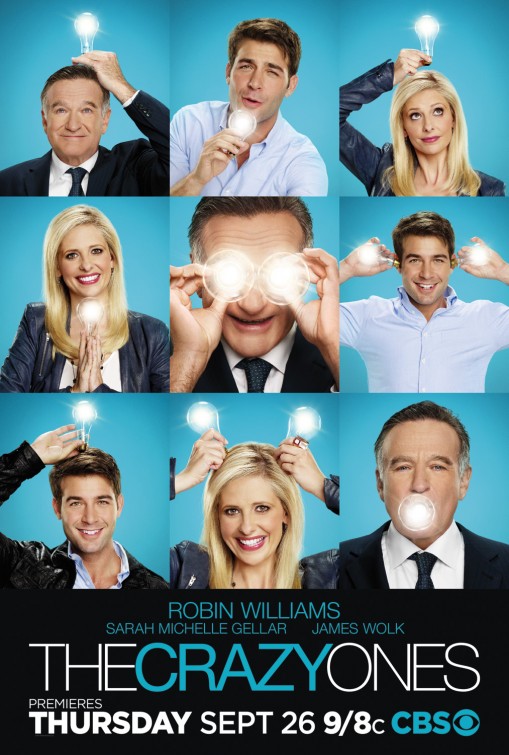
The Crazy Ones: 3 Lessons to learn from the new TV show

Friday post has arrived! Hi guys :)

So yeah, I promised to update this blog according to a schedule, but it turned out (I mean research showed) that Thursday is the best day for publishing serious stuff. Therefore, I guess will have a slight change.

It's gonna be:
  • Friday for Fun (I do hope you will find today's post cool and fun)
  • Tuesday for Teaching (PR Basics blog pst to learn something valuable)
  • Thursday for Therious Thtuff (does not seem to work this way, does it? I mean 'Serious Stuff). 

The Crazy Ones: 3 Lessons from the new TV show


Here we go, today I am going to share with you something that I have recently discovered - a witty TV show which can shed some light on how the industry of (creative) advertising works. It's like we already  know about media industry from the brilliant 'Newsroom', we also know about PR and ads from 'Mad Man', lets make something slightly different!

Is there anything else left to say? Apparently so! In just 3 (or 4, I have only watched 3 of them) episodes 'The Crazy Ones' - new comedy show on CBS starring Robin Williams and Sarah Michelle Gellar - not only made me laugh, but also provided with the inspiration for this blog post.

In a nutshell, and for those, who are going to watch this show soon (so I will not to give any spoilers here) - the show is about this creative agency that helps a whole range of clients to make their ads stand out. The agency is family run by very charismatic father  with quite an unusual managing style, and a daughter always trying to keep his crazy ideas closer to Earth. There are also other people in the creative team, such as hilarious Lauren (Amanda Setton's character -  u would probably know her from 'Gossip Girl'); charming Zach (James Wolk who appears in 'Mad Men') and a poor-thing Andrew (Hamish Linklater whom you have probably seen in 'Newsroom').

I believe there are three lessons one can learn from the first three episodes of the show.

1. Charisma is THE thing

Maybe I am not the one to judge (not yet), as this like my second year of working in a real PR industry; however, I have already observed that the most successful people in media/marketing/PR/advertising are those with an outstanding charisma. I mean of course you have to be capable of critical analysis, perform some strategical thinking actions from time to time and be able to see a bigger picture, but isn't the bigger part of those professionals everyday routine a simple communication? Meeting people, talking to them, trying to sell the story, persuading that this is THE idea client needs to implement and so on. You can be great in writing news, you can be brilliant in SWOT analysis, but if you lack that little (in fact huge) gift of charisma, oh man, you are stuck...

(By the way, do you know this joke:

- What do you do if you see a Spaceman?
- Park your car, man! )

It may only happen in movies and TV shows, but there is a chance that in reality your charisma may compensate a disasterous campaign, presentation or client meeting. As my boss likes to say: 'In the end, it is always about whether you would want to have a glass of wine with this person or not' (c).

2. Crisis is not always a challenge, but chance

If you don't know this yet, let me tell you that in Chinese the word 'crisis' or more specifically the two signs representing this word mean 'danger' and 'opportunity'; and this is a very smart way of looking at the crisis situations.

Thus, on the one hand if something goes wrong, the company/campaign/product may end up in a serious trouble. Whilst on the other, crisis can be played around in a way so the victim becomes a winner.

This situation is brilliantly illustrated in the Episode 2 of 'The Crazy Ones', where the coffee shop launch campaign and the massive outdoor installation created a real disaster not only for the creative agency, but the whole city. Luckily, the crazy ones have found a wonderful solution, making the disaster a great story for the new viral video (I guess I just told you the most of that episode, sorry:).

3. Importance of research

Yeah, you should always do your homework and be prepared. Even if you are not a sociologist (luckily I am, I mean...tend to), it is viral to remember that 6th sense, grandmother or whatever/whoever allows you making the right decisions quite often may let you down. On the contrary, a real solid research never will. Thus, in marketing/PR/advertising etc when the object of your work is aimed at people and more specifically their perception and reaction, testing, researching, evaluating and cross-checking is the key element.

This might seem funny and a bit silly, but marketers sometimes do rely on their own thoughts only - this is what is illustrated in the Episode 3 of 'The Crazy Ones'. Thus, Robin Williams' character came up with this idea for the commercial based on his past personal experience, but the reaction of the focus group participants' proved him wrong.

Moreover, I came across this situation while doing that online course in brand management, when students were asking questions like :"I don't agree that soap X is the most valuable brand this days, because I never buy it and it smells terrible. In fact, my friends never buy it either. Do you think your data may be incorrect?' Oh well, sociologists never lie (appart from when they tell us that one obese person plus one starved-to-death person makes it two 'normally-eating people'). To sum up, always test your ideas and strive to make them better and more effective.

Enjoy watching 'The Crazy Ones' and thank you all again for reading me! :)

Ever Mine,
Ever Thine,
Ever ours :)