Showing posts with label digital marketing. Show all posts

Monday, 30 September 2013

Digital and B2C Marketing Lessons to Learn From the new GTA and LFW

Hi guys! Monday time: new week and a new blog post to keep your brains busy :)

It seems like the world of technology, gaming and fashion decided to have it all these past few weeks, providing marketing practitioners with so many great case studies, tips and lessons. From London Fashion Week we can borrow some original social media marketing tools, while Grand Theft Auto V seems to be a true encyclopedia for the traditional b2c marketing. Finally, the new iPhone release demonstrated an updated marketing strategy.

Grand Theft Auto V - great marketing always pays off 

GTA can be considered as a wonderful example of something being more than just a game/product, I guess. The gaming industry masterpiece, a real legend and a true brand - Scotland can be absolutely proud of its creation. And I can be proud to be a part of Scotland for this year :). Interestingly enough, this franchise represents the case of every ancestor being more successful than the predictor, which rarely happens for the movies. I compare the game launch with the movie premiers on purpose as it seems to be the strategy chosen by the Grand Theft Auto marketers. With all the digital resources and social media effectiveness, GTA team decided to follow the more traditional advertising and marketing path. Outdoor advertising, such as billboards (first to be spotted in Warsaw, Poland) and posters; video trailers and pictures leaks - helped created the demand months before the ‘supply’ was offered to the customers.

The approximate amount spent on the developing, production and marketing of the last GTA version accounts for £170 million, according to The Scotsman. This not so much tells us that expensive products require to be promoted accordingly, but illustrates the importance of the products’ quality which can be monetized afterwards. Over 300 people, including programmers, designers and mappers worked closely together to deliver outstanding results, making the launch of the updated game similar to the movie production. (By the way, it turned out my classmate`s husband has something to with the new GTA release, like he is a part of the development team or smth! It`s almost like I know a person who knows a real celebrity!) The preparation stage accounts for some great research made for the game to look as realistic as possible. Thus, the possible explanation for the choice of traditional marketing tactics can be the following: if a brand has to offer significant value, marketers should not be reinventing the wheel.

However, a couple of innovative things from the phenomenon of GTA could be noticed in the field of advertising. Thus, in one of the recent Forbes articles by Paul Tassi, the interesting question of in-game ads is explored. Product placement in movies as well as games can be considered quite a common technique. What is new, is the issue of whether every ads are helpful. Thus, Dodge (the most frequently featured vehicle in the game) does not hurry to take advantage of such free (?) promotion. Firstly, it is not clear if women represent the main target audience for Dodge (because 47% of GTA players are actually female). Secondly, the widely criticised violence as one of the game`s distinctive feature could be seen as rather harmful for the brands, apart the Grand Theft Auto per se. Overall, the record of £1 billion in sales within three days may only suggest that games are as good a place for product placement as the most successful Hollywood hits.

London Fashion Week - sometimes the only thing your customers need is a cup of tea.

On the contrary to the GTA marketing strategy, LFW demonstrates the excessive usage of the social media channels, apps and tools for making retail. For instance, Topshop involved in their fashion week campaign two different apps: sound recognition technology ‘Chirp’ and ‘Customize the Catwalk’ application. The first one, despite the expectations did not work exceptionally well, as the software requires users to be present somewhere close to the actual location of event in order to receive information, in case of LFW - exclusive backstage pictures, videos and latest trends.

On the other hand, ‘Customize the Catwalk’ idea allowed Topshop fans to change the colours of the outfits at the very same moment they appeared on the runway. Overall, these social media and digital activities gained Topshop 8,130 Twitter mentions, says Marketing Magazine. This does not look bad at all for the mass market retailer when competing with high fashion brands.

Speaking of which, marketing chosen for the LFW by Burberry can be seen as a winner. With total number of 285,110 Twitter and Instagram mentions British trench coats icon proved collaboration strategy to be fruitful. Thus, Burberry and Apple worked together so that all the sharable content, such as pictures and video, was made before, during and after the catwalk with the use of iPhone 5S. The buzz around the new phone and the new cloths resulted into the doubled excitement of the trend hunters both in technology and fashion with a subsequent social media coverage.
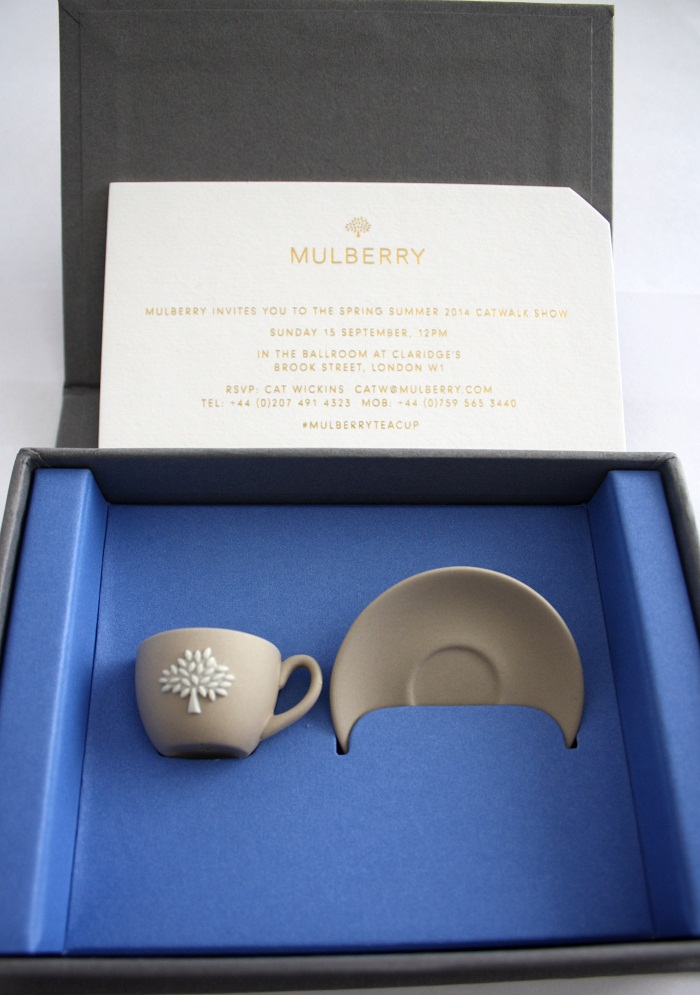
Finally, the third LFW label by the number of mentions is Mulberry. Interestingly, the brand almost reached Topshop (6,540 mentions vs 8,130) without any apps, softwares or collaborations. The pick of the social media resonance around Mulberry happened even before the start of the LFW. Invitations for the show is what made Mulberry the most talked about designer at those days. More than half of all the Tweets received were about the Wedgewood tea cups that the brand sent to the members of the guest list. These invitation were granted with a special hashtag #mulberryteacup, which received 147 mentions itself. To sum up, traditional ‘giveaway’ tactics may be as useful as innovative digital cases.

This seems like a hell of an article :) Sorry, I mean it is so long and comprehensive (I hope you agree), that I am extremely proud of it. Time to have a cup of tea and enjoy the rest of the day!

See you all soon,, here and in London!

Wednesday, 21 August 2013

4 Tips to Get the Best out of Social Media for your Business

Morning guys!

Today I am an early bird producing more interesting and hopefully useful tips. Here you are. :)

With all the amazing online shops the digital world has to offer, how do you attract the customers to really come to your retail store? Is online world for your Forever 21 a chance or a Catch 22?


In a nutshell, it is all about motivating and rewarding with the decent amount of support. Here are some simple tips on how to turn your ‘followers’ into the frequent customers:

  1. Use your social media as a Loyalty Programme Platform

Loyalty programs have become quite a popular tool for the retail stores to attract and please the customers. Similarly, to how the discounts and special deals are received as the award for spending the money, complement your customers for spending their time.

Make the process simple and engaging. Set the price list or assign a value for every Like, Tweet and comment and make it be easily converted into the real money or discount point that can be spend in the store. But does the exchange of Likes into the money really result in brand loyalty? Let`s just say: depends on how you approach it. If your circuit is reduced to a simple ‘bribing’, it will probably result just in a one-day (night) stand on your social media page. The real relationships begin when you show the audience you are on the same wavelength. This is how you do it:

  • Do not forget about non-monetary rewards, because their symbolic power really helps building relationships and gaining loyalty from your audience.  Chose ‘the fan of the month’, vote for the funniest tweet or pick ‘the most dedicated customer’. These meaningful achievements may be seen as the online equivalent for the VIP treatments.

  • Take it to the next level – give those ‘friends of the brand’ a chance to participate in what you are doing: invite them on a tour around your office, give a chance to dress the window of your store or share your wi-fi password.

  • Be creative. (This might not be the best advice to give from the practicality point of view, therefore, you can look up for the examples here:


2. Everybody likes to play, just set the rules

Hopefully surprising, this is not about the Apps and Facebook games. Another way to invite people from and through Social Media to your store is quest – little adventure that integrates online and offline tasks into one big game, making it fun and useful.

  • Think about the mechanics of the quest. How many tasks will there be in in adventure? Will you reveal all of them at once or keep the intrigue by posting one task a day (week/hour)?  Will you use only one social platform or integrate Twitter, Instagram and Foursquare all together?  

  • Motivation is a king (queen). What is the purpose of the quest and why would people want to participate? It is not only about the prize in the end, so you should make the people feel what they do matters. Perhaps, connect the fun to something bigger (for each person who completes the quest, the company will donate certain amount of money to charity or plant one tree in the local park).  

  • Examples of tasks: check-in, take a picture, find, post (anything that will benefit the brand and engage the audience).

3. Use social media as an emergency line

With any business customers will always have queries, questions and seek for assistance, so create a customer service desk on your social media page.

  • CRM. Good CRM requires a lot of resources and contribution; however, even if you cannot afford helping your clients online 24/7, they should still feel your support.

  • Do your best. Sometimes simply having a FAQs section or image on your Facebook will help. For more serious issue, establish the rules of when and how you will deal with them if you the instant response is impossible.

  • Share the duties. Educate your audience with basic tips and advices on what to do if…, so they become experts and help you with the customer service. More on CRM and customer service online here.

That is it for today. :) Let me know if there is anything you want me to write about and thanks again for reading me!!!!!


Monday, 19 August 2013

Marketing advice from my Master's dissertation No.2

Rainy-windy-busy afternoon to everyone.:)


That's been a really loooong and pleasand weekend for me, hope you enjoyed it as well. 
It is Monday now and time to read and share more interesting ideas and useful tips. As I've told you last time my dissertation seems to be full of PR and marketing insights, so I cannot wait to share the second finding with you. In fact, this will be my own thoughts with reflection on something very engaging.  

Just the day before I finished my last chapter somewhere in the labyrinth of the Internet I`ve found these amazing video. Created by extremely talented motion and graphic designer Shimi Cohen and based on Sherry Turkle's book Alone Together, it made me think of this second tip. 


2. Don't make people feel lonely


The main conclusion in the video is that SNSs, although designed to connect people and facilitate communication, in fact, made us feel even more lonely. That is because of this three paradoxical assumptions that we all have as Facebook, Twitter and Google+ users (any other SNSs counts):

- We can put our attention wherever we want it to be
- We will always be heard
- We will never have to be alone

This is the actual video in case you have not watched it yet.


What has all of these to do with marketing? Hm...I suggest it might be true that people became  less connected, less happy or even  less sociable. On the other hand, it also is true that we make those 3 above mentioned suggestions and want social networking sites to make us less lonely. Therefor, why don't you,  marketers, give people what they want?

1. Be a friend - be that company which will always make its customers day - with its oustanding services, high quality products, helpful website and attractive social media content. 

2. Always listen to your customers and make them feel you appreciate them. 

3. Never ever leave your clients, customers, readers, visitors etc. without support. There is nothing more annoying than a customer service that cannot be reached when you need it most; nothing more dissapointing than my 'witty comments' on Facebook left unnoticed by the page owner; and nothing better than a cute picture of a fluffy cat and a 'good read' posted somewhere on Google+ at 2 pm just on time, in case I could not sleep. All of this makes the digital world better, transforming users illusions in some very real customer care. 

This is it for today. :)

P.S. How cool would that be if the word loneliness meant 'no friends online', while in real life somebody was always there for you? Like abso-bloody-lutely cool! :)

Friday, 16 August 2013

Marketing advice from my Master's dissertation No.1

Hey-hey, my amazing virtual audience! :) Hope you are all doing great enjoying you digital selves.


Have not posted anything here for quite some time...I know...in my defense - I was not procrastinating, but making some wonderful scientific discoveries! In other words, I spent few sleepless nights putting together the very last chapter of my dissertation. And you know what? - That was totally worth it! Not only now I am feeling proud and relieved, but I`ve also got some pretty wonderful tipsto share with you.

Just to give you some background information: my reserach was a part of MSc Sociology programme (in case you don't know. Hm...I wonder if my blog is adding anything to promotion of such a great major?). However, the topic I`ve chosen for investigation is very digital-PR-marketing-SNS orientated.

It is all about this neologism coined to describe a phenomenon when people 'Like' and '+1' and 'Share' and show huge online support, but than this all stay Facebook-(or whatever)-declared only. They (and by them I mean journalists and academia people) call it 'slacktvism', 'clicktivism', 'keyboard activism' and so on. If you google the thing, you'll probably find more articles on politics, civic activism, charities and similar contextualisation of the idea. Well, I kind of studied similar dimension in my dissertation, but because I cannot reveal anything specific here (due to University Policy on Ethics and something else), I decided to share some thoughts on the application of my findings for the PR and marketing purposes. In particular, it really is interesting why many people state 'purchase promising' behaviours online (e.g. in a form of 'Like'), but never actually buy, leaving your digital or social media manager sad and almost fired.

To clarify, with the tips provided bellow I hope to give you some answers (or just food for thought) on the issue of:

'I have 135k Twitter followers and have not sold anything to them yet', or 'Facebook picture of our new product got 200k likes and 100 reshares, but only 10 people order it from our shop' and etc.

I know these are very childish-silly kinds of examples, but I hope, you know what I mean. Let's see how slacktivism of SNS users may be transformed into some real sales. I will hope it will be possible to conclude after I explain some possible reasons of the existing gap between 'online intentions' and 'offline actions'.

1. Time is money.


This conclusion may seem quite obvious, but the biggest concern of nowaday lives is time, there is always not enough hours to sleep, not enough minutes to talk and not enough years to make our dreams come true. Many web designers and development companies have already understood this idea and applied to their interfaces, making everything as simply as it can possibly be. Therefore, every business trying to sell products needs to simplify purchasing experience. Online shops was a partial solution to a problem.

On the other hand, if you compare a number of received 'Likes' with your sales statistics, the difference may be explained by the 'instantaneous factor'. The nature of 'Like' or '+1' button suggests its being the easiest way of showing agreement/support/approval/emapthy and many other feelings and emotions (yeah, at this point you might ask where is the 'Unlike' or 'Hate' option).  Whilst the process of considering what was 'Liked' takes a while, with a high tendency towards 'not to buy' desicion. My conclusion here is that social media are great for PR and marketing purposes, but it is important to keep in mind their rather entertaining character. Thus, you can and should promote your stuff online, but not put many expectations on the instant sales growth.

In this respect, I think if there was a social network for shopaholics with the initial aim of 'selling and buying' with not just 'Like' but 'Buy' buttons, it would be really successful. People would create their 'shopper profiles' and post 'look what I`ve just bought' statuses. To some extent my point can be proved with the example of Russian social network vk.com where there are thousands of 'VK groups' (communities) where people only promore and sell '100% non fake Ray-Bin glasses from Vietnam'.

Conclusion: the longer it takes for a customer to proceed from initial seeing ('Liking') of your product to actual 'here is my money I want this' phase; the less likely is the chance of completing a purchase.

What to do:

  • have online shop - have direct links on you SNS accounts (posts) to the online store; 
  • if you don't have online store - have your adress and opening hours and all the important information regarding the purchase written AS CLEARLY AS POSSIBLE IN A PLACE WHERE YOUR CUSTOMER SEES IT (not where YOU think it should be)

P.S. Yeah, right, I am talking about how time is expensive these days and made you spent almost 15 valuable minutes reading this extra-long article....Sorry for that. :) 

Come back tomorrow and you will have even more shocking impressive fascinating tip based on the findings of my recent research! 

Take care! :)


Saturday, 10 August 2013

Guerrilla marketing and digital approach

Lazy Saturday to everyone,

I am a bit out of track these days - caught cold and was working on the last chapter of my dissertation, therefore, did not write much here. But today I was reading this little note I found on some SNS and thought it was interesting thing to write about.

Our discussion, more like my writing, today will concern the so-called 'guerrilla marketing' and its digital dimension. For those who don't know the term refers to quite cheap means of marketing for the businesses  who cannot afford very expensive tools, so this is something you can do even if your company has only 2 employees, 1 laptop and plenty of great ideas. The only condition for choosing guerrilla marketing as a main tactic is creativity. In that article I mentioned above 25 examples of the   guerrilla techniques for marketing and PR were given. I want to share with you the most interesting ones and give the idea of possible digital application of those techniques.

Picture source: crystalbballforecasting.com

Here we go:

1. Attract attention. One way of marketing as a real guerrilla is to organize a 'fake' meeting near you companies office. Say there will be a group of people holding streamers like 'This business is too amazing', 'this company is too professional', 'their services are too good and effective'. This kind of mass event will certainly gather people's attention and may become a good news hook. On the other hand, this somehow indirect way of promotion and even self irony will work better as more straightforward 'we are the best company - choose us'.

As for the digital implication of such technique one would probably immediately think of viral marketing. Viral content without direct sales flavour have proven its efficiency in a number of campaigns. One of my favourites is viral video about English speaking traffic officer, created by a language school in Ukraine before the UEFA EURO 2012  championship. For those who don't know - check this video. Another example would be Internet memes or the use of hashtags for marketing purposes that help generate awareness of a company or a product.

2. Use business cards. Every business person has business card. That's clear. What isn't so obvious are the creative ways those cards may be used. For instance, guerrilla marketing suggests going to a local library, finding books in the section, relevant for your business and putting hour business cards in those books. In this way, you are only doing good stuff. Say, a person is interested in reading about painting walls. He/ she opens a book and...ha! out of nowhere there is 'Clever wall painters' business card inside of the book. Of course, there is no guarantee the person will use your service, but readers would definitely appreciate a free bookmark you gave them.

The digital analogue of this approach can be made in a few ways. Firstly, you may think of posting stuff about your company in a relevant Internet communities and forums. However, I am not sure as a user  whether I would much appreciate this, because those posts don't always have similar value for me as a free bookmark. On the other hand,  information about a company on a source like Wikipedia as an example (in a good context) make people aware and increase chances of consideration. If you think of Wikipedia as a book, an article about your company or a mentioning is like a business card in the library. Hey, Wikipedia haters, don't get me started! I know some of you may think of its low authority as information source and unchecked content. As Master's student I am absolutely aware of the criticism and limits, but millions of users and crowds of other students would argue that Wikipedia has great persuasive power, just don't forget about the audience you are going to target.
Other form of digital business card, I guess, would be: a link to your website and social media accounts, reference in the thought leader's blog or industry journal.

3. Comment, read and keep commenting.  The last technique would be initially digital, but I would think of real-life alternative in the end. So, don't underestimate the importance on commenting and supporting conversations about your company (product, service). When you comment on information  regarding your business (e.g. in other people's blog or website), this gives you better promotional opportunities than writing information yourself - it is less direct and, therefore, less aggressive. Similarly, it is important to always comment and reply on other people's posts and notes in your own blog, website or SNS page.

As I promised to think of a real-life example of the last technique, the one thing I came up with is 'join the conversation'. Have people talking about your business out loud at some event, join their conversation and make other people hear. No, not like scream through loudspeaker, but spread the word in non-obtrusive maner. Like: 'Yeah, I heard that company is great, my sister uses their services all the time'.

Wednesday, 7 August 2013

SeoQuake for quick SEO and brand clean up

Hello everyone!

Hope, you are doing great and cannot wait to read my new tip. I did not come back to you for a couple of days, therefore, I decided this time I write something extremely interesting.

This tip will be more marketing, digital, PR focused, as I will talk (write) about SEO.

Few weeks ago I was working on the 'bran clean up', for those who don`t know it is a procedure the company needs to follow after they have changed the name, logo or moved to another location. This always seems quite unprofessional and damage the brand, when it`s already been few years after you changed your logo but media still uses the old one. If you want to change this unfortunate situation you really have to think about 'brand clean up' - create a list of links where your company is mentioned and contact the outlets asking to update the information. Seems like a lot of work, ha? It certainly is, but I will give you some tips how substantially decrease the amount of time you spend on this.

1. You need to search for all the pages that include any info about your company (you can search using the old company's name or a new one if the update you want regards a logo). It probably makes sense to limit the period of search, location and etc. Another way to go, is not update evrything, bit the most influential sources. How do you decide on those?

2. SeoQuake - this is a must have program (plugin) for every marketing/PR/difital professional. In a nutshell, this is great addition to your Google, Firefox or other search engine which helps visualize important data on SEO. On the SeoQuake website you can read the following:

'Beginner web masters and seos will find SeoQuake useful for estimating effectiveness and competitive ability of their SEO efforts. In the hands of professional SeoQuake will become a powerful and indispensable tool for analyzing optimization and promotion level of internet web-projects.'

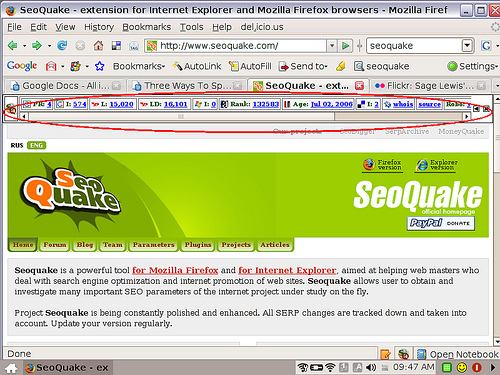
After you install the software on your computer, you will be able to see SEO metrics for every page you open, such as Google page rank, the number of pages that are indexed by Yahoo, Alexa ranking and many others. Overall, it looks like this:


If you would like to read more about how to install this plugin and how to interpret metrics, visit this page. 

3. Back to the brand clean up. :-) so knowing the metrics for the websites, you can choose which ones definitely need updating (the most influential ones) and those who can wait. Moreover, you can optimize the Google search by setting desirable parameters, say, you are looking for the pages with most Facenook likes or something.

4. Another fantastic option SeoQuake gives you, is a possibility to export your search results into the Excel table. Isn't it great? Having everything in one place with opportunity to work with a file without additional copy-pasting. In addition, it is handy because for your clean up, you will probably need to mark all the search results with different colours or notes. For example, you can first mark the pages which are news stories or reports, or case studies. `these are the ones you, probably, won't be able to change. However, you can anyway email the editors with the updates on your new logo, company name and any other data for their future purposes. Secondly, you can mark pages that need update by your HR department, such as job offering websites, LinkedIn page, Yellow pages and etc. Thirdly, I suggest you mark search results which are difficult to interpret (any weird pages). This how I would do it, but the procedure may differ.

Here is a nice article explaining how you can export your SeoQuake results to Excel.

5. Finally, you will need to contact all the websites with the same email requesting the update. This is the stage that takes ages. You see, only when human factor is involved, the process slows down. :) Either than that, with SeoQuake brand clean up is as easy as it's never been.

Hope you like this info. Share and like and read me more .:)
            

Friday, 2 August 2013

Cision: Media Relations from the new vision

Sunny hello to everyone!

Today`s information may look like some kind of advertising, but it is not, even though I do recommend this software to every PR professional.

The very first day of my internship I was introduced to the best friend of every PR person - Cisionpoint by Cision.


I don`t know if you ever had 'Excel based map' experience (when you have to create and update, and rearrange the lists of media contacts important for your work), but I know this was terrible and inconvinient.
Not only we had to almost be friends with journalists to get their contacts or spend the whole week Googleing and searching for the email address so secret it was never displayed on the newspapers website, but the data needed quite a regular update with the same procedures.

Apparently in the UK (and the US) things are so much easier, you just subscribe for the Cisionpoint software and half of the work is already done for you.

Details

What is it? - Imagine your Excel list of media contacts in the global scale. Yes, this software has all (or almost all) media contacts, including the personal contacts of journalists, freelancers, bloggers and even Twitter though leaders necessary for successful campaign. Of course, the most fully completed database, I believe, is for UK and American media outlets. However, I checked, all the most influential Russian, Ukrainian, Polish and Turkish contacts are there.


What can I do with it? - You can create projects and make media contact`s lists for every of them, handpicking the right journalists. The search options even let you find people who write about 'fish tourism from radical perspective' (but why would you want to look for them?). More seriously, the profiles of the newspapers, magazines and webistes include information about the audience, editors, areas of interests, influentiality and etc.
In addition, you can write and send press releases through this software to the early chosen contacts, making the emails as personalised as possible just in a few clicks! (I was really impressed with this). Later on, you will receive the monitoring of your coverage on a daily basis and analyse the results of your work. You can also add your own contacts and edit existing ones.


Why would I need it? - I really have no ideas about the monthly price the company should pay for using this software, but I believe it is worth it. (Information on the prices should be available here). Cisionpoint substantially help PR professionals in their daily routine, is quite simple and easy-to-use.

Here are some YouTube videos I found to show Cisionpoint in work:

1. Search tutorial 
2. Coverage monitoring notifications tutorial 


And finally, on cision blog I found this article interesting, so I share it with you - 

7 PR Pitches That Will Get My Attention Every Time


Hope this is useful. :)

Best wishes! 


Thursday, 1 August 2013

Great information sources for Digital Marketing geeks

Hi everyone! (Sometimes it feels like I am talking to myself)

Today I am writing this post little bit later, because it is raining outside, I have day off from work and need to meet my dissertation supervisor. Even though the day is busy, I still decided to spend a few minutes sharing valuable (let's hope so) information with you.

I think for people who already work in marketing, PR and media the following paragraphs won't be surprising at all, but for beginners and recent graduates it might be interesting.

Here is a list of sources (blogs and websites) I have started reading regularly to receive all the up-to-date information from the digital world. Most of them started as blogs similar to mine, but now they are thought leaders and first class news providers. There you go:

TOP-8 NEWS SOURCES EVERY DIGITAL MARKETING MEDIA PR PROFESSIONAL SHOULD READ

1. Mashable  (Top Social Media News, technology innovations and digital stuff) - my favourite one


2. Econsultancy (Digital Marketing) - my second favourite source


3. Brand Republic (Advertising, Media, Marketing and PR)


4. Social Media Today (Social media insights for business, I personally love their infographics) 


5. The Next Web  (Blog on technology which is very useful for digital marketing and everything on the Web)


6. Marketing (Magazine, obviously for Marketing specialists and fans) 


7. SEO Moz or just MOZ (The company specializing in SEO since 2004, their blog is extremely useful for search engine optimization professionals) 


8. Allthings D (technology and media news for digital marketing purposes) 


Enjoy! And I wish, one day, somebody will mention my blog in their TOP list.

Cheerio! :)